Learn · Game design

Cameras in 3D games

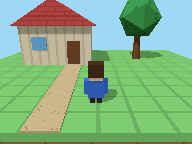
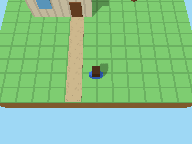
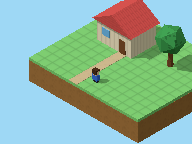
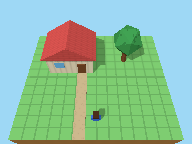
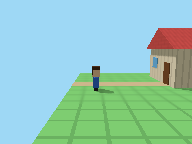
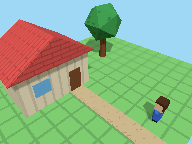
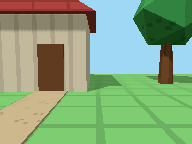
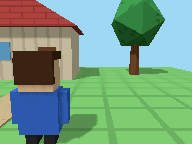
A 3D game builds its world once and films it with a camera that can go anywhere. Most games put it in one of about eight places. Here is one little world, a house, a tree, and a hero, filmed from each.

Behind the hero First-person Inside the hero's head: you see what they see. Details
Behind the hero Over-the-shoulder Close behind and off to one side, so the hero never blocks the aim. Details
Behind the hero Third-person (chase) A few steps behind and above, following the hero round the world. Details
Above the world Top-down High over the hero, looking nearly straight down. Details
Above the world Isometric (fixed angle) A fixed diagonal view that follows the hero. Details
Above the world Strategy (free) High over the map, moved by the player instead of following a hero. Details
Placed by the designer Side-on (2.5D) Beside the hero, sliding along as they run: a 3D world played like a 2D one. Details
Placed by the designer Fixed cameras Up in a corner of each room, cutting to the next as the hero walks on. Details
Pick a camera

Move the camera yourself

The left picture is the world with the camera in it; the right is what the camera films. The cameras are closer than they look: third-person is first-person pulled back, and over-the-shoulder is third-person pulled in and stepped to one side.

The 3D world needs JavaScript.

The world, with the camera in it. Drag to look round.
What the camera sees
Pick a camera
Or move it yourself

Behind the hero

The camera rides with the hero: in their head, over their shoulder, or a few steps back. The player turns it to look around.

First-person: Inside the hero's head: you see what they see.

First-person

Also called FPS view, eye view

The camera sits in the hero's head and turns wherever they look. Nothing blocks the view, but you can't see your own hero, so games draw arms or a weapon to stand in for them.

Moved by
The hero's head; the mouse or right stick looks round
Lens
Perspective, usually wide
Good for
Shooters, immersive sims, horror
Over-the-shoulder: Close behind and off to one side, so the hero never blocks the aim.

Over-the-shoulder

Also called OTS, shoulder cam

The camera hangs just behind one shoulder, a little to the side, so the middle of the screen stays clear for aiming while the hero stays in view.

Moved by
Follows the hero; aiming pulls it closer
Lens
Perspective
Good for
Shooters, action games with aiming
Third-person (chase): A few steps behind and above, following the hero round the world.

Third-person (chase)

Also called chase camera, follow camera, orbit camera

The camera follows a few steps behind and above the hero, and the right stick swings it round them. It's the usual camera of 3D adventures, and the hardest to get right, because walls keep getting in the way.

Moved by
Follows the hero; the right stick swings it round them
Lens
Perspective
Good for
Action-adventure, 3D platformers, open worlds

Above the world

The camera hangs over the ground at an angle the game picks, so the player steers the hero, or the whole map, rather than the view.

Top-down: High over the hero, looking nearly straight down.

Top-down

Also called overhead, bird's-eye

The camera hangs high over the hero and follows without turning, so up on the stick is always up on the screen. Unlike 2D top-down art, its perspective lens still shows the sides of things near the edges.

Moved by
Follows the hero from above, never turning
Lens
Perspective
Good for
Twin-stick shooters, action RPGs, party games
Isometric (fixed angle): A fixed diagonal view that follows the hero.

Isometric (fixed angle)

Also called fixed angle, three-quarter

The camera looks down at a fixed diagonal and follows the hero, like 2D isometric art, but the world is real 3D. Some games let you turn it in 90° steps, and many use a flat lens to keep the 2D look.

Moved by
Follows the hero; some games turn it in 90° steps
Lens
Flat, or a narrow perspective
Good for
Action RPGs, tactics, management games
Strategy (free): High over the map, moved by the player instead of following a hero.

Strategy (free)

Also called RTS camera, map camera, god view

There's no hero to follow, so the player drives the camera itself: across the map, in close to a fight, and in some games round. It usually looks down at around 45° to 60°.

Moved by
The player pans, zooms, and sometimes turns it
Lens
Perspective
Good for
Real-time strategy, city builders, god games
Placed by the designer

The designer decides where the camera stands, room by room or along a track. The player moves the hero, never the view.

Side-on (2.5D): Beside the hero, sliding along as they run: a 3D world played like a 2D one.

Side-on (2.5D)

Also called 2.5D, side-scroller camera

The camera watches from the side and slides along with the hero, so a fully 3D world plays like a 2D platformer. The perspective lens still gives the background depth as it scrolls.

Moved by
Slides along beside the hero, on a track the designer sets
Lens
Perspective
Good for
2.5D platformers, brawlers
Fixed cameras: Up in a corner of each room, cutting to the next as the hero walks on.

Fixed cameras

Also called fixed angles, security-camera view

The designer puts a camera in each room or stretch of path, framed like a film shot, and the game cuts between them as the hero walks. The player steers the hero but never the view, which makes scenes tense and cinematic.

Moved by
Nobody: each room has its own, and the game cuts between them
Lens
Perspective
Good for
Survival horror, puzzle adventures

What a 3D camera has to handle

A 2D camera only scrolls. A camera that follows a hero through a 3D world has more to do:

  • Walls in the way. When something comes between the camera and the hero, the camera slides in front of it, or the wall fades out.
  • Smoothing. It trails the hero a little and eases into turns, so every step doesn't jolt the screen.
  • Looking ahead. It leans the way the hero is heading, so the player sees what's coming.
  • Too close to see. Anything nearer than the camera's near plane is cut away, so first-person games often draw the hero's arms separately, where they can't poke into walls.
  • Field of view. A wide lens shows more around the hero. A narrow one feels closer, but in first-person it makes some players motion-sick.

Side by side

Camera Moved by Lens
First-person The hero's head; the mouse or right stick looks round Perspective, usually wide
Over-the-shoulder Follows the hero; aiming pulls it closer Perspective
Third-person (chase) Follows the hero; the right stick swings it round them Perspective
Top-down Follows the hero from above, never turning Perspective
Isometric (fixed angle) Follows the hero; some games turn it in 90° steps Flat, or a narrow perspective
Strategy (free) The player pans, zooms, and sometimes turns it Perspective
Side-on (2.5D) Slides along beside the hero, on a track the designer sets Perspective
Fixed cameras Nobody: each room has its own, and the game cuts between them Perspective

Coming from 2D

A 2D game paints its camera into the art, so each view needs its own drawings. See how the same scene looks through the 2D views, and where a 3D camera would stand for each, in Camera views in 2D games.

What the camera's lens does is in Lenses and field of view, and how the world it films is drawn, layer by layer, is in Building a 3D scene.