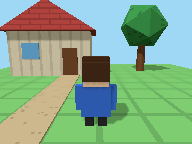
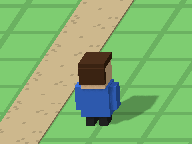
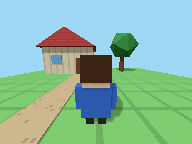
Lines of sight spread out from one point, like an eye, so far things look smaller. The field of view is how far they spread: the wider it is, the closer the camera must come to keep the hero the same size.
Wide (110°)
Also called wide-angle
A wide lens takes in a lot at once, so the camera has to come close to keep the hero big, and everything beyond them looks far off. The edges of the picture stretch. Fast shooters run wide so players see more around them, and racing games widen it at speed.
- Field of view
- 110° across
- Stands back
- 1.3 m
- Good for
- Fast shooters, a feeling of speed
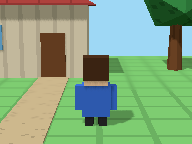
Normal (70°)
Also called standard
Somewhere from about 60° to 90° across looks natural on a screen seen from a normal distance, neither stretched nor squashed. Most third-person and console games start here.
- Field of view
- 70° across
- Stands back
- 2.7 m
- Good for
- Third-person games, most 3D games
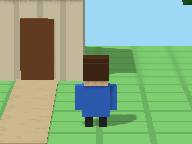
Narrow (30°)
Also called long lens, telephoto
A narrow lens sees a small slice, so the camera backs off to keep the hero the same size, and things behind them stop shrinking as fast: the background seems to crowd in. Films use it to pack a scene together.
- Field of view
- 30° across
- Stands back
- 7 m
- Good for
- Cutscenes, scopes, diorama looks
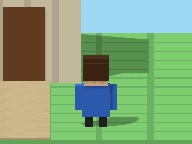
Very narrow (10°)
Also called telephoto
A very narrow lens watches from far off, and near and far shrink by almost the same amount, so depth all but disappears. Push this to the limit, infinitely far with no angle at all, and you get the flat lens.
- Field of view
- 10° across
- Stands back
- 21 m
- Good for
- Zoomed-in views, a nearly flat look